

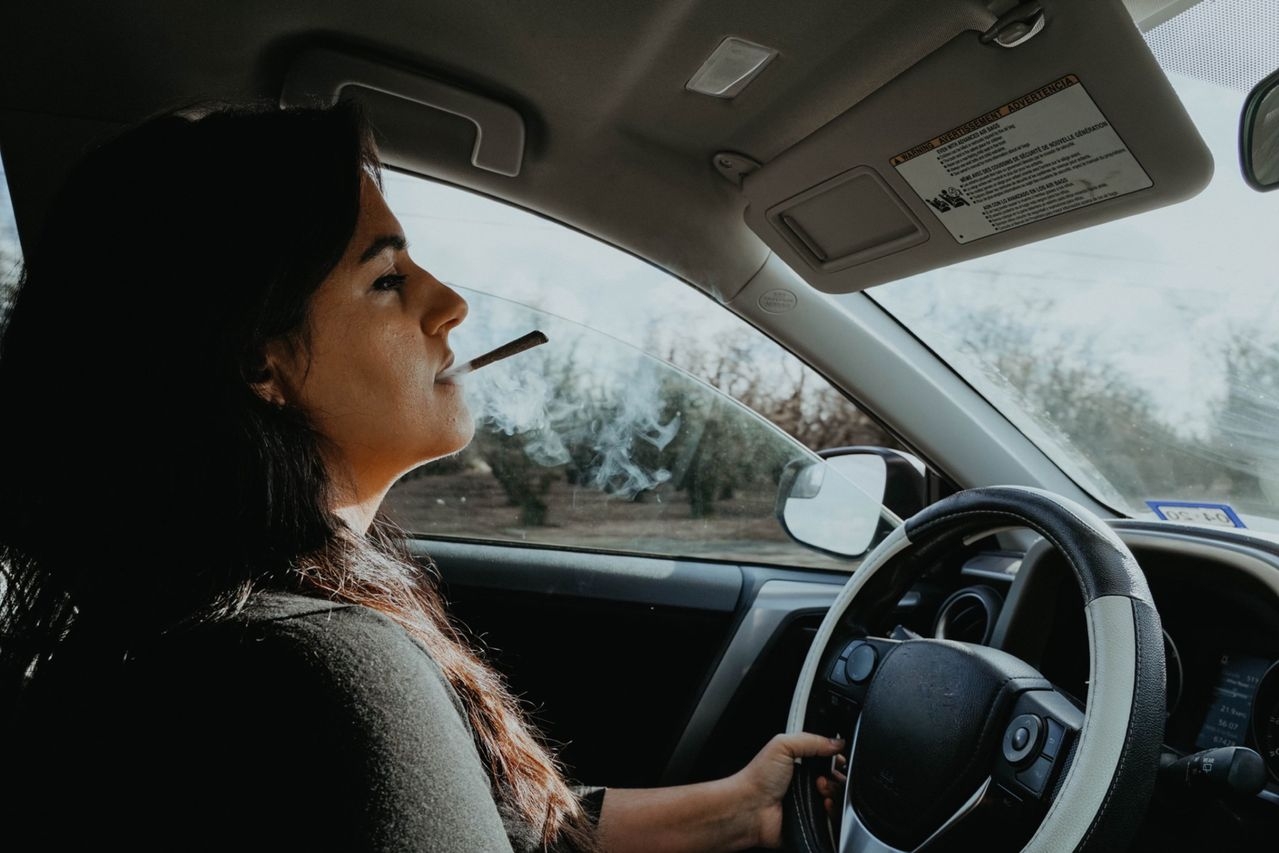
You were pulled over while driving in New Jersey. The officer asked whether you had used cannabis, when you last used it, or whether you had taken any prescription medication or another substance. Perhaps you were asked to step out of the vehicle, complete roadside exercises, and undergo an evaluation by an officer trained to identify signs associated with drug impairment.
Now the police are claiming you were driving high. Perhaps an alcohol breath test did not account for the impairment the officer claimed to observe, leading police to investigate whether cannabis or another substance was involved.
I am Lauren E. Scardella of The Scardella Law Firm LLC. An officer’s conclusion that you were driving high does not, by itself, explain what happened or establish how cannabis may have affected your driving. The observations, testing, statements, recordings, and procedures involved in the investigation all require context.
A cannabis-related DWI case can involve several forms of evidence, and the significance of each one depends on the surrounding circumstances.
Can You Be Charged With DWI for Cannabis Use in New Jersey?
Yes. New Jersey’s DWI law does not apply only to alcohol.
Under N.J.S.A. 39:4-50, a person can be charged with operating a vehicle while under the influence of an intoxicating liquor, narcotic, hallucinogenic, or habit-producing drug.
This can include cannabis, illegal controlled substances, and prescription or over-the-counter medications when the State alleges that the substance substantially diminished your mental faculties or physical capabilities and made it improper for you to operate a vehicle.
The substance does not have to be illegal. A valid prescription does not by itself prevent a DWI charge if the State alleges that the medication placed you under the influence while you were operating the vehicle.
Unlike an alcohol-based DWI case, a cannabis-related case does not ordinarily turn on a numerical threshold comparable to a blood alcohol concentration of 0.08 percent. The State may instead rely on driving observations, physical signs, statements, field sobriety performance, a drug recognition evaluation, toxicology results, video, and the surrounding circumstances.
What Did the Officer Observe Before the Stop?
The investigation often begins with the officer’s explanation for stopping or approaching the vehicle.
The police report may claim that you:
- Drifted between lanes
- Drove unusually slowly
- Failed to maintain a consistent speed
- Stopped in an unexpected location
- Reacted slowly to a traffic signal
- Made an unsafe turn
- Became involved in an accident
These observations can become important, but they do not automatically prove drug impairment. Road conditions, weather, fatigue, distraction, mechanical trouble, or an attempt to avoid an obstruction may provide another explanation for unusual driving.
Patrol-car footage, traffic-camera recordings, dispatch information, and other evidence of the vehicle’s movements may help show what occurred before the stop and whether the officer’s written account is supported by the available evidence.
What Physical Signs Can the Police Use?
After making contact, an officer may document physical or behavioral signs that the officer associates with drug use.
The report could refer to:
- Red or watery eyes
- Dilated or constricted pupils
- Slow or rapid speech
- Tremors
- Unusual movements
- Difficulty following instructions
- Confusion
- Drowsiness
- Nervousness
These observations can contribute to the State’s case, but their meaning should not be assumed.
Red eyes can result from allergies, fatigue, contact lenses, or irritation. You may also tremble or appear nervous because you are anxious or frightened during a traffic stop. Speech, balance, and coordination can be affected by medical conditions, physical injuries, stress, or exhaustion.
Listing signs associated with drug use is not the same as explaining whether cannabis impaired your ability to drive at that time.
Does the Smell or Presence of Cannabis Prove You Were Driving High?
An officer may report smelling burnt or raw cannabis, seeing cannabis or related products inside the vehicle, or finding packaging, a vape device, or other items associated with cannabis use. Those facts can become part of the DWI investigation. Still, they do not necessarily establish that you used the cannabis, when it was used, or whether you were impaired while operating the vehicle.
New Jersey’s legalization of adult cannabis possession does not permit impaired driving. At the same time, the odor of cannabis does not, by itself, prove that you committed a cannabis-possession offense or that you were impaired. An officer can still consider odor together with driving behavior, physical observations, statements, roadside performance, and other circumstances when investigating possible impaired driving.
Cannabis found in a shared vehicle also does not necessarily establish that it belonged to you or that you recently consumed it. The location of the item, whether it was open or sealed, who else occupied the vehicle, and what the available recordings and statements show can all matter.
Do Field Sobriety Exercises Prove Drug Impairment?
An officer may ask you to perform roadside exercises such as walking heel-to-toe, standing on one leg, or following an object with your eyes.
The officer may describe missed steps, balance problems, incorrect turns, raised arms, or difficulty following instructions. Body-camera or dash-camera footage can be especially important when evaluating these claims.
The conditions surrounding the exercises matter. Uneven pavement, traffic, poor lighting, weather, unsuitable footwear, age, injuries, anxiety, and medical conditions can all affect performance.
The State can use your performance as circumstantial evidence. The significance of that performance can depend on how the exercises were explained and administered, the conditions at the location, and whether the recording supports the officer’s account.
What Is a Drug Recognition Evaluation?
When an alcohol breath test does not explain the officer’s observations, police may request an evaluation by a specially trained Drug Recognition Expert, commonly referred to as a DRE officer.
A DRE officer is a law enforcement officer who has received specialized training in identifying signs associated with different categories of drugs. The evaluation generally follows a 12-step protocol that can include an interview with the arresting officer, an examination of you, repeated pulse readings, blood pressure and temperature measurements, eye examinations, divided-attention exercises, muscle tone observations, questions about possible drug use, and a request for a biological sample for toxicology testing.
At the end of the evaluation, the DRE officer may offer an opinion that the recorded findings are consistent with the ingestion or use of a particular category or categories of drugs.
A careful review of a DRE evaluation can include:
- Whether the officer was properly trained and certified
- Whether the required procedures were followed
- Whether any steps were omitted or performed incorrectly
- Whether the recorded findings support the officer’s final opinion
- Whether medical conditions or other possible explanations were adequately considered
- Whether the toxicology results correspond with the DRE officer’s conclusion
- Whether video footage contradicts the written report
- Whether the officer’s opinion remained within the permitted scope of DRE testimony
In State v. Olenowski, the New Jersey Supreme Court held that qualifying DRE testimony can be admitted, but it limited what the officer may conclude. A DRE may testify that the findings are consistent with the ingestion or use of a category of drugs, but that opinion does not by itself prove that drugs caused the alleged impairment.
Can Blood or Urine Test Results Be Used?
The State may seek a blood or urine sample to identify substances in your system.
A toxicology result can show that a drug, medication, or metabolite was detected. Depending on the substance and type of test, however, it may not establish precisely when the substance was consumed, whether it was producing impairing effects while you were driving, or whether it caused the behavior the officer observed.
That distinction can be particularly important in a cannabis DWI case. A result consistent with prior cannabis use is not necessarily proof that cannabis impaired you at the time you operated the vehicle.
The legal basis for obtaining the sample and the reliability of the testing can also require review. Relevant issues may include consent or a warrant, the collection procedure, chain of custody, laboratory methods, and how the results were interpreted.
Can Your Statements Be Used Against You?
What you say during the traffic stop or at the police station can become part of the evidence.
An officer may ask when you last used cannabis, how much you consumed, whether you smoked or used an edible, what prescriptions you take, or whether you presently feel the effects of a substance. Even a statement intended as an innocent explanation can later be characterized as an admission.
The complete recording matters. A written report might summarize a conversation in a few sentences, while body-camera footage can reveal the exact question, the complete answer, and the circumstances in which it was given.
What Can Body-Camera and Vehicle Evidence Show?
Body-camera and patrol-car recordings can preserve what occurred after the stop, including your speech, movements, responsiveness, demeanor, and performance on roadside exercises. They can also show the instructions the officer gave, the conditions under which the exercises were performed, and the full context of questions and answers summarized in the police report.
Evidence associated with the vehicle can include cannabis products, packaging, receipts, vape devices, photographs of the interior, and statements from passengers. The location and condition of an item may be relevant, but the presence of cannabis does not, by itself, establish who possessed it, when it was consumed, or whether it impaired you while driving.
Together, these materials may confirm portions of the officer’s account, reveal inconsistencies, or preserve relevant circumstances that the written report does not address.
What Should Be Reviewed After a Cannabis-Related DWI Charge?
A cannabis-related DWI charge should be evaluated by examining the complete investigation, not one observation, test result, or officer opinion in isolation.
At The Scardella Law Firm LLC, I focus on whether the State’s evidence reliably connects cannabis use to impairment while you were driving. Depending on the circumstances, that can involve the basis for the stop, the officer’s observations, your statements, recordings, roadside exercises, a DRE evaluation, toxicology evidence, and other relevant facts.
I also consider whether the evidence contains inconsistencies, leaves important questions unanswered, or supports explanations unrelated to cannabis impairment.
Much of the communication, discovery review, and preparation involved in a cannabis-related DWI matter can take place remotely, which can reduce the need for trips to my office. Some municipal court proceedings may also be conducted virtually. Still, the court controls the format of each proceeding and may require you to appear in person for a hearing, trial, sentencing, or another court event. You should not assume that the entire case can be handled online.
Contact The Scardella Law Firm LLC About a Cannabis-Related DWI Charge
If you were charged with a cannabis-related DWI in New Jersey, the evidence against you may involve much more than a single test or observation. Understanding what the State is relying on, and what that evidence actually shows, can help you make informed decisions about how to respond.
I represent clients facing DWI and municipal court charges throughout New Jersey. Contact The Scardella Law Firm LLC to schedule a free, confidential consultation with me and discuss the evidence in your case.
Disclaimer: The articles on this blog are for informational purposes only and are no substitute for legal advice or an attorney-client relationship. If you are seeking legal advice, please contact the law firm directly.